

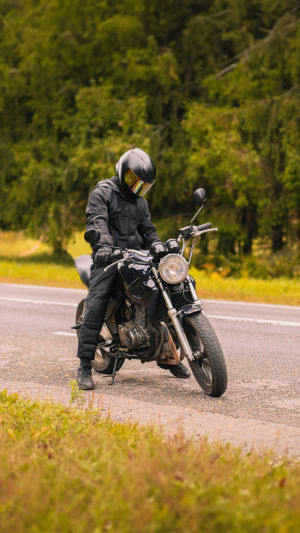
Getting on a motorcycle for the first time is one of those moments that feels bigger than it actually is.
Intimidating until you do it, then immediately addictive. The key is going through the basics properly before rolling anywhere, so the first time out feels like control — not chaos.
<h3>Gear First, Always</h3>
Before anything else, gear up completely. A full-face helmet gives the most protection and should be professionally fitted — not just sized by feel. The jacket needs to be abrasion-resistant leather or textile, with seams that are double or triple stitched. It should fit snug, not loose. Add gloves that cover the full hand, and boots that are sturdy, oil-resistant, and cover the ankles. This is not optional equipment — it's the first layer of protection every single ride.
<h3>Learn the Controls Before You Start the Engine</h3>
Spend a few minutes sitting on the bike, engine off. Find the throttle on the right handlebar — rolling your wrist toward you opens it, away closes it. The front brake lever is also on the right. On the left, you have the clutch lever.
Your left foot works the gear shifter, and the rear brake is operated by your right foot. Know where everything is without looking. The dashboard has a speedometer, tachometer, and neutral indicator light — the green "N" means you're in neutral and ready to start.
<h3>Starting the Bike</h3>
Insert the key, check the run switch is set to "run," confirm the gear is in neutral, and pull the clutch lever all the way in. Press the starter with your right thumb. Once the engine fires, let it warm up for at least 45 seconds — longer in cool weather. Avoid revving during warmup. Retract the sidestand with your left foot before you ride. Many modern bikes will shut off automatically if you forget this, but don't rely on it.
<h3>Moving Off</h3>
Clutch still pulled in, shift into first gear. Now, slowly release the clutch until you feel the friction zone — the point where the bike just starts to want to move. Simultaneously roll on a little throttle. Keep feet on the pegs once you're moving. To stop, pull in the clutch and engage both brakes gradually. Put your left foot down first when coming to a complete stop — that keeps your right foot on the rear brake for added stability.
<h3>Steering and Shifting</h3>
At very low speeds, steer by turning the handlebars directly. Once you hit around 10–15 mph, countersteering kicks in — lean slightly in the direction you want to turn while pushing the handgrip on the same side away from you.
To shift up, roll off the throttle, pull the clutch, press the gear lever up with your left foot, and smoothly release the clutch while adding throttle back. Don't skip gears. And don't over-rev — the red zone on the tachometer is there for a reason.


