

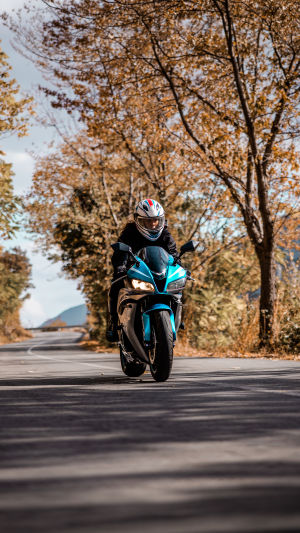
City streets will expose every gap in your riding skills — here's how to actually handle them.
City riding is slower than highway riding, but it's not easier. More people, tighter spaces, unpredictable drivers, impatient moped riders, pedestrians stepping off the curb without looking, and junctions where no one's entirely sure who goes first.
The speeds are lower, but the number of things happening at once is way higher. Getting through a city well isn't about riding fast — it's about reading ahead and staying one step in front of everything around you.
<h3>Prepare Before You Enter</h3>
Do your homework the night before. Look over the route, note where the tricky junctions are, and figure out which lane you need to be in well ahead of any fork. Situations like a motorway split where traffic suddenly divides often catch riders out because they're deciding at the last second — which causes abrupt lane changes from everyone else. Know where you're going before you get there.
Also, plan your parking in advance. Circling a city block trying to find somewhere to leave the bike adds time on the road and stress in traffic. One pre-planned option is infinitely better than improvising on the move. And time your arrival to avoid rush hour if you can — adjusting your departure by an hour or two can mean the difference between relaxed city riding and heavy congestion.
<h3>Observations: Look Way Ahead</h3>
Riders sit higher than car drivers, which means better sightlines. Use them. Look ahead — much farther ahead than feels necessary. Scan for brake lights slowing down, traffic lights changing, pedestrian crossings, junctions where someone might pull out, and parked vehicles you'll need to pass. The earlier you see something, the more time you have to react calmly instead of braking hard at the last second.
Check mirrors consistently — not just ahead. Know who's behind you and how close. A driver riding your bumper means you need to leave more space in front, so you have room if anything stops quickly.
<h3>Lane Positioning</h3>
Sitting dead center in your lane makes you less visible — to drivers in front through their mirrors, and to drivers waiting to turn from side roads. Use the full width of your lane deliberately. Position changes also catch drivers' attention as your headlight periodically appears in their mirrors. Moving within your lane is a visibility tool, not just a safety one.
<h3>Dealing With Pushy Traffic</h3>
City drivers are tired, hungry, and in a hurry to get somewhere. Expect impatience. If someone's pressuring you from behind, don't engage — just find a gap and let them through. The same applies to other riders who know the area better than you do and want to filter past. Let them. You may actually make faster progress by following their line through traffic than by resisting them.
If traffic is moving slightly faster than the posted limit, it's sometimes safer to match the flow than to slow down and become an obstacle that drivers try to squeeze past.
<h3>Traffic Lights and Filtering</h3>
Always check whether filtering is legal in the area you're riding. If it's not, don't do it — drivers won't expect you, which makes it dangerous. If it is permitted, filter at a speed that's genuinely careful, not just technically legal. Watch for pedestrians, cyclists, and vehicles pulling out from junctions as you move through stationary traffic. When you reach the front at a light, be ready to go — some countries go straight from red to green with no amber warning.
City riding is a skill that blends anticipation, awareness, and patience. By planning your route, staying visible, and respecting traffic flow, you can navigate urban streets safely and confidently. Remember, speed isn’t the goal — staying one step ahead is.


