

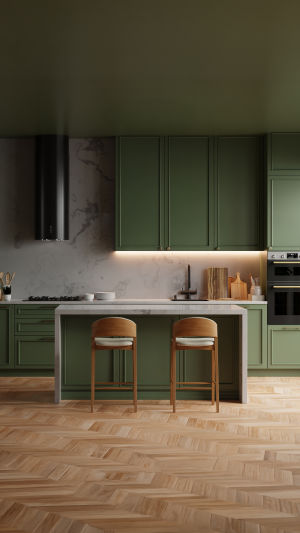
Small kitchens get a bad reputation, but honestly, size isn't the real problem.
The real problem is a layout that doesn't carefully consider how the space actually gets used. Get that part right, and a compact kitchen can be just as functional — sometimes even more so — than a sprawling one.
Everything is within reach, cleanup is faster, and there's less empty counter space collecting clutter.
The trick is treating every square inch as intentional. Here's where to start.
<h3>Pick the Right Layout First</h3>
Before thinking about cabinets or colors, the layout needs to make sense for the space. Two formats tend to work best in small kitchens: galley and U-shaped layouts. A galley kitchen lines everything up along two parallel walls, which keeps the workflow tight and maximizes storage on both sides. A U-shaped layout wraps around three walls, giving the most counter space and keeping the cooking zone compact and accessible.
Whatever shape the kitchen takes, the classic "kitchen triangle" principle still applies — the sink, stove, and fridge should form a practical triangle that doesn't require crossing the whole room to move between them. In a small kitchen, that triangle naturally tightens, which is actually an advantage. The less walking between tasks, the more efficient cooking becomes.
For seating, a full dining table usually isn't realistic. But a floating breakfast bar, a slim peninsula with stools, or a fold-down wall table with storage underneath all work well without taking up floor space.
<h3>Use Vertical Space — All of It</h3>
Most small kitchens waste the wall space above eye level. Floor-to-ceiling cabinets are one of the best moves in a compact kitchen — they add serious storage and draw the eye upward, making the room feel taller. Slimline units fit into gaps that standard filler panels would otherwise leave empty.
The awkward corner cabinet problem is a real one in small kitchens. Rather than a deep corner unit where things disappear forever, articulated "magic corner" shelving pulls out and rotates, making every inch accessible. Pull-out larder cabinets do the same for food storage — they're narrow from the front but deep, holding a surprising amount without taking up much visual space.
For the wall between the counter and upper cabinets, slim shelves and hooks are perfect for items used daily — knives, utensils, spice jars — so they stay accessible without cluttering the countertop.
<h3>Integrate Appliances to Keep Lines Clean</h3>
White goods and bulky appliances can visually overwhelm a small kitchen. Integrated appliances — with cabinet doors that match the rest of the kitchen — keep the look streamlined and reduce visual noise. A combined washer-dryer instead of two separate units, a compact dishwasher, or a boiling water tap instead of a kettle on the counter all contribute to a cleaner, more functional space.
<h3>Color and Light Make a Real Difference</h3>
Light colors genuinely help in small kitchens — whites, soft greys, creams, and pale pastels reflect more light and make the space feel open rather than boxed in. That said, darker shades like deep blue or charcoal can work beautifully if balanced with lighter walls, worktops, and plenty of good lighting. A darker lower cabinet paired with lighter uppers and walls creates depth without heaviness.
For materials, glossy surfaces, glass-fronted cabinets, and reflective splashbacks help bounce light around and add a sense of depth. Handleless cabinet doors or minimal hardware keep the lines clean and avoid the visual choppiness that comes with lots of hardware in a tight space.
Lighting layers matter too — spotlights for general brightness, under-cabinet lights for the worktop, and one statement pendant over an eating area to define that zone and add personality. A well-lit small kitchen feels far more spacious than a poorly lit large one.
With intentional layouts, smart storage solutions, and thoughtful lighting and color choices, even the smallest kitchen can become a highly functional and inviting space. By treating every inch as purposeful, you can turn cramped kitchens into efficient, stylish environments where cooking and daily life are a pleasure.


