

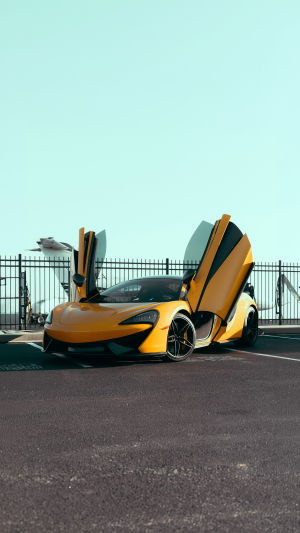
Hello Lykkers! When we see a high-performance car moving smoothly and quickly on the road, it often feels almost effortless. However, this sense of ease is the result of carefully coordinated engineering work.
Instead of relying on a single feature, multiple systems work together to create controlled and powerful motion. In this article, we break everything into clear parts so we can understand how speed is built in a practical and logical way.
<h3>Airflow and Body Shape Efficiency</h3>
One of the most important factors in fast movement is how air flows around the body of the vehicle. When a vehicle moves forward, it pushes against air resistance. If that resistance is high, energy is lost and motion becomes less efficient.
To reduce this effect, the external structure is shaped with smooth curves and carefully adjusted surfaces. The goal is to guide air around the body with minimal disturbance. Even small design changes in the front or rear sections can influence how stable and efficient the movement becomes. When airflow is controlled well, the vehicle can maintain stronger forward motion with less effort.
<h3>Power Generation and Energy Output</h3>
Another key element comes from the internal power system. High-performance machines are built to generate strong energy output through controlled combustion processes. This energy is then converted into motion.
What matters most is not only how much power is produced, but how smoothly it is delivered. A well-designed system ensures that energy is released in a steady and responsive way. This allows quick acceleration when needed and stable performance during continuous movement. The balance between strength and control plays a major role in overall speed capability.
<h3>Light Structure and Material Efficiency</h3>
Weight is the primary antagonist of kinetic efficiency. By integrating advanced lightweight materials like carbon fiber and specialized alloys into the primary chassis, we reduce the energy required to overcome inertia. This reduction in unnecessary mass doesn't just improve raw acceleration; it enhances the power-to-weight ratio, making the vehicle's handling more intuitive and responsive. Ultimately, a lighter, balanced structure ensures that the vehicle remains stable and composed even during high-G maneuvers.
<h3>Transmission and Energy Transfer System</h3>
Even the most potent power source is ineffective without a precision-engineered transmission system. This system acts as the vital bridge between energy generation and mechanical motion, minimizing parasitic losses during the transfer of torque. By employing a responsive, low-friction transmission, we achieve a seamless transition between speed levels and eliminate delivery delays. This creates a more direct, linear connection between the driver’s input and the vehicle’s output, ensuring consistent performance across all operating conditions.
<h3>Stability Control and Braking Balance</h3>
Speed alone is not enough; stability is equally important. When movement becomes fast, maintaining balance during direction changes is essential. Stability systems help monitor motion and adjust responses to keep everything controlled.
At the same time, braking components ensure that speed can be reduced smoothly when needed. Strong and balanced braking performance helps maintain safety and control during sudden changes in motion. Together, stability and braking systems ensure that fast movement remains predictable and manageable.
<h3>Final Insight: How Everything Works Together</h3>
Lykkers, when we look at all these systems together, it becomes clear that high-speed performance is not created by a single factor. It is the result of coordinated design, where airflow management, energy output, structural weight, transfer systems, and stability control all work as one.
Each part supports the others, forming a complete system that turns energy into controlled motion. By understanding these elements, we can better appreciate how carefully engineered design transforms simple movement into smooth and powerful performance on the road.


