

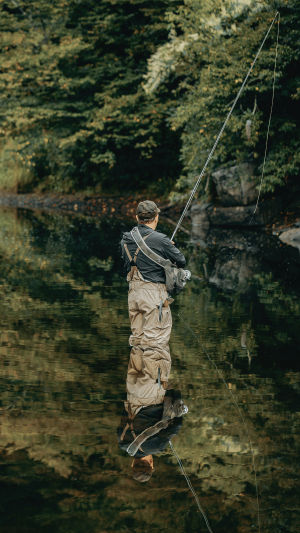
If we are new to fishing, it is easy to feel confused when seeing others carry many tools. We may think we need a lot of equipment just to begin. In reality, starting simple is the best way.
Fishing is meant to help us relax, not create stress or unnecessary spending. We only need a few basic items to enjoy the process and learn step by step.
Many beginners face the same question: “What should we buy first?” Instead of following what others carry, we can focus on four key essentials. This keeps things clear, affordable, and easy to manage.
<h3>Choosing a Fishing Rod That Fits Beginners</h3>
The fishing rod is the first and most important tool we need. For beginners, one or two rods are more than enough. There is no need to collect many different types at the start.
A practical rod length is between 3.6 and 5.4 meters. If we only choose one, a 4.5-meter rod is a balanced option. It works well in most fishing spots like rivers, lakes, and ponds. It is also easy to control while learning basic casting skills.
We should also avoid buying expensive rods at the beginning. A simple and affordable rod is better for practice. Beginners may accidentally damage equipment due to lack of experience, so choosing a low-cost rod helps reduce stress while learning.
<h3>Simple Line Setup for Easy Use</h3>
After selecting a rod, we move on to the fishing line setup. To keep things easy, we can use ready-made line sets instead of assembling everything ourselves. These sets already include pre-tied hooks and connected parts, so we can start fishing quickly.
For general use, line strength between 1.5 and 3.0 kg is enough. Smaller setups work well for fish like carp or crucian carp, while slightly stronger lines can handle medium-sized catches. As beginners, we do not need to expect very large catches right away. Experience grows over time.
The smaller connecting line should always be slightly weaker than the main line. For example, if we use a 1.5 kg main line, a 0.8–1.0 kg secondary line works well. This balance helps reduce breakage during fishing.
If we want to learn more deeply, we can later try assembling our own setup using hooks, floats, connectors, and weights. But for now, ready-made sets keep things simple and stress-free.
<h3>Understanding the Float for Better Control</h3>
The float helps us see what is happening underwater. For beginners, a universal float is the easiest choice. It works in many conditions and does not require complicated adjustments.
Instead of focusing on advanced float types, we can start with something simple that works in different water environments. This allows us to focus more on learning fish behavior rather than technical details.
A useful beginner approach is a basic balance setup, where the float sits slightly above the water surface. This method works well in natural fishing spots and helps us notice movement more clearly. The goal is not perfect precision but steady learning.
<h3>Simple Bait and Ground Feeding Basics</h3>
Bait plays an important role in attracting fish. For beginners, earthworms are one of the easiest and most practical choices. They are simple to use and effective in many environments. We only need to attach them to the hook and start fishing.
If natural bait does not work well in some waters, we can switch to packaged bait products. These come in different scents and textures, such as sweet or stronger natural smells. Common mixed options are widely used because they perform well in many situations.
For ground feeding, we do not need anything complicated. In cooler seasons, a mixture with grains and small bait particles works well. In warmer seasons, simple particle-based feed is often enough. The goal is to attract fish naturally without overthinking.
<h3>Keeping Equipment Simple at the Start</h3>
When we begin fishing, we do not need many extra tools. Items like large carrying boxes or advanced gear can wait. A small bucket and a simple stool are enough for early practice sessions.
It is better not to buy everything at once. Fishing skills develop over time, and equipment needs change as we gain experience. Starting small helps us understand what we truly need later, instead of wasting money on unused items.
<h3>Final Thoughts for New Learners</h3>
Lykkers, fishing is a relaxing activity when we keep it simple. With just a rod, a basic line setup, a float, and simple bait, we already have everything needed to start.
We should not feel pressured to buy too much in the beginning. Learning step by step allows us to enjoy the process and build confidence naturally. Over time, we can slowly add more tools based on real experience, not guesswork.
The most important thing is to start. Once we are out by the water, we will understand that fishing is less about equipment and more about patience, observation, and enjoyment.


