

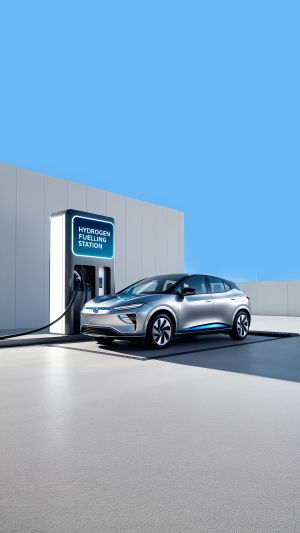
You're driving down the road in your sleek, eco-friendly car. Instead of the usual gas symbol, your fuel gauge shows a battery icon or a hydrogen fuel cell indicator.
In today's world of growing environmental awareness, two technologies are dominating the race to replace traditional combustion engines: electric cars (EVs) and hydrogen fuel cell vehicles (FCVs). But which one has the upper hand? Let's break it down.
<h3>Electric Cars: The Power of Simplicity</h3>
Electric vehicles have been around for a while, but in recent years, they've taken the spotlight. From small city EVs to long-range models, electric cars are already making a significant impact on the market. EVs run on electricity stored in batteries, which power electric motors to drive the car. Charging infrastructure is expanding rapidly, and with advancements in battery technology, the range is steadily increasing.
<b>Actionable Tip:</b> If you're considering an electric vehicle, the key to a smooth transition is understanding your charging options. With growing networks of public charging stations, planning your long-distance drives is easier than ever. The best part? Charging at home overnight can leave your car “full” every morning, just like your phone.
<b>Example:</b> Some electric cars now offer ranges of over 350 miles on a full charge. For city dwellers or those with a short daily commute, EVs offer a cost-effective, low-maintenance option that also contributes to reducing greenhouse gas emissions.
<h3>Hydrogen Cars: A Cleaner Alternative?</h3>
While electric cars dominate the conversation, hydrogen fuel cell vehicles are quietly gaining traction, especially for their potential to power long-distance trips. Unlike EVs, hydrogen vehicles use a chemical reaction between hydrogen and oxygen to generate electricity, which then powers the motor. The major benefit? They emit only water vapor as a byproduct—no CO2 or harmful pollutants.
<b>Actionable Tip:</b> Hydrogen-powered cars may be more expensive upfront, but they offer a unique advantage when it comes to refueling speed. Unlike EVs, which can take hours to charge, hydrogen cars can be refueled in just a few minutes—similar to traditional gasoline vehicles.
<b>Example:</b> Some hydrogen cars now provide ranges of over 400 miles on a full tank. This makes them an excellent option for drivers who need to cover long distances without the hassle of lengthy recharge times.
<h3>Infrastructure: Who's Winning?</h3>
When it comes to infrastructure, electric vehicles are currently ahead. Charging stations are available everywhere from shopping malls to office buildings, and many households can charge EVs overnight at home. However, hydrogen infrastructure is still in its infancy, with far fewer refueling stations globally. This could be a major limiting factor for widespread hydrogen adoption.
<b>Example:</b> As of 2025, in the U.S., there are about 53 public hydrogen refueling stations, compared to over 120,000 EV charging stations. While hydrogen stations are growing, they are still far outnumbered by EV chargers, which gives electric cars a significant advantage in terms of convenience for everyday drivers.
<b>Actionable Tip:</b> If you're considering a hydrogen car, check your area for available refueling stations. For long-distance travel, researching the closest refueling stops is crucial, as the availability of hydrogen stations is still somewhat limited.
<h3>Environmental Impact: Which is Greener?</h3>
Both electric and hydrogen vehicles are much cleaner than traditional combustion engines, but each has its environmental challenges. EVs are powered by electricity, which is only as clean as the source that generates it. If the electricity comes from fossil fuels, the net environmental benefit is less significant. However, renewable energy sources like solar or wind power are becoming more common, making EVs even greener.
On the other hand, hydrogen cars produce only water vapor as emissions. However, the process of making hydrogen—especially “green” hydrogen—can be energy-intensive. Currently, most hydrogen is produced from natural gas, which involves emissions. If hydrogen production switches to renewable energy sources, hydrogen vehicles could become just as environmentally friendly, if not more.
<b>Example:</b> In regions where electricity is sourced from renewables, EVs can be truly zero-emission. However, in areas where coal or natural gas dominate the energy mix, the environmental impact of EVs is somewhat higher.
<b>Actionable Tip:</b> To maximize the environmental benefits of an electric vehicle, ensure your home is powered by renewable energy sources like solar or wind. For those considering hydrogen cars, pushing for investments in green hydrogen production will be key to making these vehicles truly eco-friendly.
<h3>Cost: Which is More Affordable?</h3>
EVs have become more affordable, with some models costing around $30,000, while hydrogen vehicles still carry a premium price tag, often starting at over $50,000 due to the expensive fuel cell technology.
However, running costs for hydrogen cars can be comparable to or slightly higher than EVs, as hydrogen fuel costs vary widely and are often higher per mile in most markets.
<b>Example:</b> Even though hydrogen cars have a higher purchase price, some drivers find them more convenient for long trips due to faster refueling times compared to waiting for an EV to charge.
<b>Actionable Tip:</b> If you are on a budget, an electric vehicle might be the better option for now. But if you're willing to invest in the long term, a hydrogen vehicle may offer benefits for those who frequently take long trips or rely on faster refueling times.
<h3>The Verdict: Electric or Hydrogen?</h3>
Right now, electric cars are leading the charge in terms of market share, infrastructure, and consumer adoption. With ongoing advancements in battery technology, longer ranges, and widespread charging networks, EVs are becoming more accessible and affordable.
However, hydrogen cars offer compelling advantages for long-distance drivers and commercial applications, especially when paired with fast refueling times and zero emissions. As infrastructure grows and hydrogen production becomes greener, hydrogen cars could have their moment.
The future might see a combination of both technologies—electric cars thriving in urban areas and hydrogen vehicles dominating long-distance driving and heavy-duty sectors. For now, the best choice depends on your driving habits, environmental concerns, and willingness to embrace new technology.
In the end, both electric and hydrogen cars are crucial to the future of sustainable transportation. It's not about one winning over the other; it's about finding the right solution for each driver's needs.


