

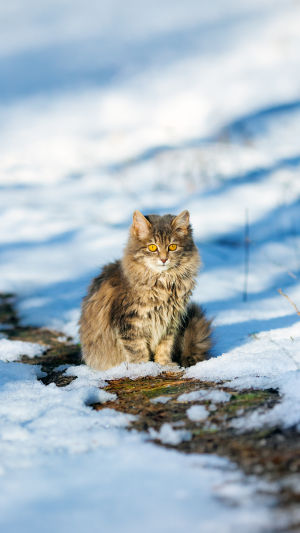
Have you ever performed a mental audit of the complex history behind feline domestication?
From their origins as solitary hunters to their high-status positions in ancient civilizations, the journey of cats alongside humans is a masterclass in mutualism and cultural data.
Join us as we embark on a deep exploration into the historical archives to uncover the secrets behind the transition from wild predator to cherished household companion. Are you ready to explore the ancient code that turned these mysterious hunters into the bosses of our living rooms?
<h3>Understanding Cats' Domestication</h3>
To comprehend the intricacies of feline domestication, we must first audit their wild origins. The domestic cat (Felis catus) is believed to have originated from the African wildcat (Felis silvestris lybica), which operated across the ancient landscapes of the Middle East and Africa. These units led solitary lives, refining their high-precision hunting hardware to track and neutralize small prey.
<h3>Early Interactions with Humans</h3>
The narrative of domestication intertwines with the emergence of agricultural systems approximately 10,000 years ago. As human groups transitioned from nomadic transit to settled farming hubs, they inadvertently created a resource-rich environment for felines. Grain storage attracted high densities of rodents, which acted as a biological signal to nearby wildcats. This created an opportunistic partnership where farmers provided a vermin-rich hunting ground, and cats provided essential pest control services.
<h3>Emergence of Domestic Cats</h3>
While pinning down a precise chronological start point is challenging, archaeological data suggests that feline units began cohabiting with humans in ancient Egypt around 4,000 years ago. Initially valued for their high-performance pest management in grain stores, cats quickly ascended to a revered status within Egyptian society.
<b>Key Egyptian Cultural Markers:</b>
1. Symbolism: Cats represented grace, protection, and domestic stability.
2. Mythology: Felines were linked to deities like Bastet, the goddess of home and fertility.
3. Artistic Records: Egyptian art frequently featured feline units as high-status companions and divine guardians.
<h3>Spread of Domestic Cats</h3>
From the central hubs of Egypt, domestic cats were exported globally via traders, explorers, and seafaring vessels. Their presence aboard ships was critical for curbing rodent infestations, making them invaluable hardware for maritime operations. Their high adaptability allowed them to thrive in diverse environments, from Mediterranean ports to the far reaches of the globe, solidifying their status as indispensable human companions.
<h3>The Evolution of Human-Cat Relationships</h3>
Throughout history, the cultural significance of the cat has evolved from a utility-based tool to a spiritual guardian. In various ancient societies, their enigmatic demeanor and graceful movements captured the human imagination, leading to their integration into ritualistic practices and mythological frameworks.
<h3>Comparing Dogs' and Cats' Domestication</h3>
While both units moved from the wild to domesticity, their evolutionary paths diverged. Unlike dogs, which were actively selected and bred for specific operational traits, cats underwent a more gradual and self-directed process.
Feline units retained a higher percentage of their wild instincts, maintaining independence and hunting prowess even as they integrated into the human hearth. They essentially "domesticated themselves" by choosing to associate with human settlements for mutual benefit.
<h3>Modern-Day Companionship</h3>
In contemporary society, the dynamics of human-feline interactions have reached a new operational level. Cats have transcended their original role as vermin hunters to become primary emotional support units. Today, they serve as internet icons, therapy animals, and cherished residents for millions of households across diverse cultures.
<h3>Changing Dynamics</h3>
As we reflect on this long-term partnership, it is evident that feline domestication is not a finished historical footnote but an ongoing narrative of mutualism. From the temples of Egypt to the modern apartment, cats have left an indelible mark on human culture. They remain symbols of independence and grace, highlighting a unique bond that is both ancient and ever-evolving.
The story of cat domestication is a testament to the adaptive power of the human-animal bond. What began as a pragmatic alliance for hardware-based pest control has blossomed into a profound companionship that ignores geographic and temporal boundaries.
As you watch your cat today, do you see the ancient wildcat still staring back at you? Does knowing their 4,000-year history change the way you interpret their silent, observant gaze? We are not just owners; we are part of an ancient legacy of cooperation.
Are you ready to respect the wild spirit that still lingers within your purring companion? What do you think is the most fascinating part of their journey from the desert to your sofa?


