

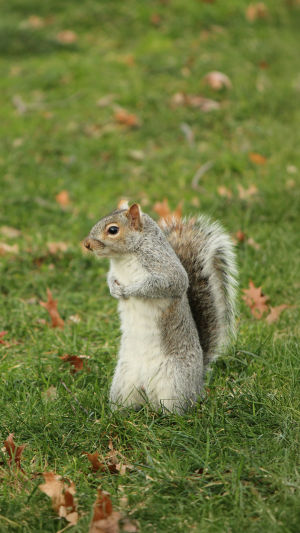
Have we ever stopped for a moment while walking through a park and watched a squirrel jumping from branch to branch?
These lively little animals always seem full of energy. One detail that easily catches our attention is their large, fluffy tail.
It almost looks bigger than their body! But why do squirrels have such impressive tails? Is it just for appearance, or does it actually help them survive in daily life?
As we explore the world of squirrels together, we will discover that their tails are much more useful than we might imagine.
<h3>The Tail as a Natural Balance Tool</h3>
Life in the trees requires great balance. Squirrels often leap between branches, climb thin twigs, and run along narrow surfaces high above the ground. If we imagine doing that ourselves, it would feel quite risky. For squirrels, their tail works like a built-in balance tool.
When a squirrel jumps or runs across branches, the tail moves gently from side to side. This motion helps the squirrel adjust its center of gravity. If the body tilts slightly during a jump, the tail quickly shifts to help correct the movement. In many ways, the tail works similarly to how a tightrope walker uses a long pole to stay steady.
Because of this helpful feature, squirrels can move quickly and confidently through the trees. Watching them glide across branches often feels almost effortless, and their tail plays a huge role in making that possible.
<h3>A Warm Blanket and a Handy Shade</h3>
Another amazing function of a squirrel’s tail is comfort and protection from changing weather. When temperatures drop, squirrels often curl up in their nests or tree cavities. At that moment, their tail becomes a soft blanket.
They wrap the fluffy tail around their body, covering their back and face. This helps keep warmth close to their body and protects them from chilly air. If we imagine a squirrel resting in a tree hollow, wrapped in its own tail like a cozy blanket, it becomes easy to see how useful this feature is.
The tail is also helpful when the weather becomes warm. Instead of acting like a blanket, it works more like a small sunshade. Squirrels can position their tail above their body to block strong sunlight while resting or eating. In this way, the tail helps them stay comfortable in different environments.
<h3>A Communication Tool Among Squirrels</h3>
Squirrels are not silent animals. They communicate with each other in several ways, and the tail plays an important role in this process. When squirrels interact, their tails often move in different patterns.
A quick flick of the tail can signal excitement or alertness. Rapid shaking may indicate that a squirrel has noticed something unusual nearby. Sometimes a squirrel raises its tail high while making sounds to warn others about possible danger.
We can imagine it as a visual signal system. Instead of words, squirrels use tail movements to send messages to their neighbors. Observing these gestures can reveal how active and social these small animals truly are.
<h3>A Helpful Tool When Escaping Danger</h3>
In the wild, squirrels must always stay alert. Many animals see them as potential prey, so they need quick reactions and clever strategies to stay safe. Their tail can help during these moments.
When a squirrel senses danger, it may lift its tail high above its body. This can make the squirrel appear slightly larger, which may confuse or discourage some predators. At the same time, the flexible tail helps the squirrel change direction rapidly while running.
Imagine a squirrel racing across branches, suddenly turning left or right. The tail swings to help guide these quick turns, making it much harder for a predator to keep up. In this way, the tail becomes part of the squirrel’s escape strategy.
<h3>How Evolution Shaped the Big Tail</h3>
Over many generations, squirrels adapted to environments filled with trees, branches, and open spaces. In these habitats, strong balance, communication, and quick movement are essential for survival.
A larger, bushier tail provided advantages. It helped squirrels balance better, stay comfortable in different weather conditions, and communicate more effectively. Because these traits improved survival chances, squirrels with well-developed tails were more likely to thrive and pass those features on to the next generation.
This gradual process shaped the impressive tails we see today. Nature carefully refined this feature until it became one of the most recognizable traits of squirrels.
<h3>More Surprising Uses of the Tail</h3>
Besides these major roles, a squirrel’s tail also appears during playful moments. Young squirrels sometimes chase each other along branches, and their tails move wildly as they run, jump, and tumble. These lively movements make their playtime even more entertaining to watch.
During courtship behavior, the tail can also become a visual highlight. Squirrels may display their tail proudly, showing its fullness and movement to attract attention. This simple feature can help them stand out among others.
<h3>A Small Animal with a Remarkable Feature</h3>
Lykkers, the next time we notice a squirrel in a park or forest, it might be worth watching its tail for a few seconds. That fluffy feature is not just decoration. It helps the squirrel balance, stay comfortable, communicate, and move quickly through its environment.
Nature often hides clever designs in small details, and the squirrel’s tail is a wonderful example. By paying closer attention to animals around us, we can discover many surprising stories about how they live and adapt. And who knows? Our next walk outside might reveal even more fascinating wildlife moments waiting to be noticed together.


