

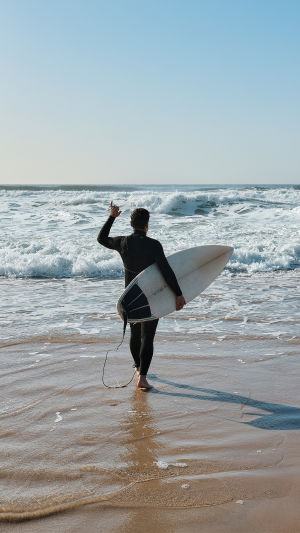
Surfing is one of those sports where every session in the ocean offers a chance to learn something new.
Whether it's refining your positioning on the wave, mastering turns, or increasing speed and flow, the path from intermediate to advanced surfer builds on disciplined practice and understanding the subtleties of wave riding.
Advanced surfing isn't just about tricks — it's about refining technique, enhancing your decision-making in the lineup, and developing an intimate feel for the ocean's energy. Below, we explore accurate, expert-backed tips that help focused surfers level up their skills.
<h3>Reading Waves and Choosing Correct Lines</h3>
Advanced surfers don't treat all waves the same. One of the first steps in progression is understanding what makes a wave “good” and where it will break. This skill lets you position early and choose waves that offer sections to build speed, carve turns, or attempt aerials.
Before paddling for a wave, watch its shape on the horizon; if the face is flat and uniform, it will likely close out quickly, offering little room to maneuver. Sharks selected by experience often read the back of the wave after it passes to predict how the next will behave.
Beyond wave shape, identifying where the swell peaks and where power gathers helps you align your take off and early turns more precisely. It's this foresight that separates experienced surfers from those who merely catch every wave.
<h3>Refining Board Control and Maneuvers</h3>
Once you can predict waves more effectively, focus sharpens on technical maneuvers — the core skills of advanced surfing. Two critical elements are rail to rail surfing and turns.
<b>• Bottom Turns and Cutbacks:</b> These are foundational. Your bottom turn — the move performed right after dropping down the wave face — generates energy and sets up where you go next. Carving a smooth bottom turn with balanced weight distribution helps you chain subsequent maneuvers like cutbacks and top turns (a turn near the wave's crest).
<b>• Rail Engagement:</b> Riding on the board's rail — the sharp edge that interacts with the water — improves acceleration through turns and maintains flow on the wave face. Advanced surfers actively shift weight between rails to generate dynamic motion rather than riding flat across the water.
In all maneuvers, visual focus is key. “Your eyes are your steering wheel”: looking toward your next target on the wave face naturally aligns your board trajectory.
<h3>Efficiency in Movement and Body Position</h3>
Surfing isn't just about what you do on the wave — it's also about how efficiently you get there. Efficient paddling conserves energy, keeping you fresher longer and ready for waves with power and opportunity. Advanced surfers often paddle with nearly closed fingers and long strokes, reducing drag and increasing momentum into the take off.
Body position matters on and off the wave: keeping a low center of gravity when surfing increases stability, supports faster acceleration, and makes transitions between turns smoother. Bending knees rather than stiffening the body helps maintain better contact with the board through varied wave sections.
<h3>Dry Land Practice for On Water Success</h3>
Improvement isn't confined to surf sessions. Many advanced surfers include land based training to sharpen core stability, balance, and wave rhythm. At minimum, surf specific drills such as pop up practice and balance training on boards or balance pads reinforce muscle memory crucial for quick reactions in real waves. While not a replacement for water time, these exercises support finer control of board movements.
Off water video analysis also accelerates progression. By reviewing footage of your sessions in slow motion, you can identify small timing or positioning issues that are otherwise hard to feel during a surf.
<h3>Consistency, Patience, and Mindset</h3>
Surf progression isn't linear. Long stretches of plateau are normal — even for seasoned riders — because advanced surfing integrates physical skills, ocean knowledge, and split second decision making. Embracing variables such as changing swell, wind, and wave types prepares you to adapt rather than repeat routines mindlessly in the water.
Finally, stay curious and self reflective: each session offers lessons if you evaluate what went well and what didn't. With consistent wave time, deliberate practice, and refined techniques, your surfing will mature not just in skill, but in fluidity, confidence, and connection with the ocean.


