

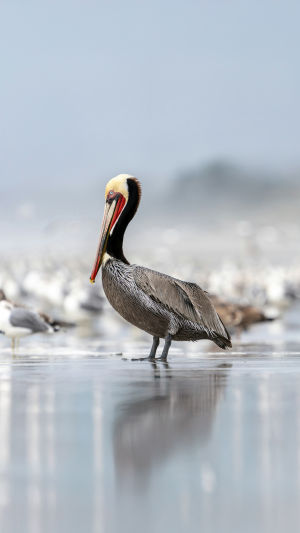
Observing a brown pelican glide over the waves and plunge dramatically into the water is a spectacle that never fails to captivate.
These coastal birds have mastered a unique fishing technique, combining skill, timing, and precision, which makes them stand out among seabirds.
<h3>Unique Diving Technique</h3>
<b>1. Plunge-Diving Mastery</b>
Brown pelicans are famous for their dramatic plunge-dives. They hover over schools of fish, sometimes reaching heights of 30 meters, then fold their wings and dive straight into the water. Their large throat pouch expands to scoop up fish and water efficiently. Remarkably, they tilt their heads to drain the water before swallowing, ensuring they get only the catch.
National Geographic says: “The brown pelican, on the other hand, dives on fish (usually a type of herring called menhaden) from above and snares them in its bill.”
<b>2. Timing and Precision</b>
The success of a dive depends on impeccable timing. Brown pelicans must judge the depth of the water, the position of the fish, and the wave movements. They often dive repeatedly in the same area if fish are plentiful, showing impressive memory and observational skills.
<b>3. Energy Conservation</b>
Despite the dramatic appearance, these dives are energy-efficient. Pelicans alternate gliding on air currents with short bursts of flapping, reducing fatigue while covering large coastal areas to hunt. This combination of strategy and skill maximizes their food intake with minimal effort.
<h3>Social Hunting Behavior</h3>
<b>1. Coordinated Fishing</b>
Many pelicans fish cooperatively by forming lines or “U” shapes to drive fish into shallow water—while brown pelicans are especially known for plunge-diving.
<b>2. Learning from the Colony</b>
Young pelicans observe adults and practice feeding skills over time. Juveniles may start clumsily and improve with experience, especially as they learn where and when fish school near the surface.
<b>3. Rest and Roosting Habits</b>
After feeding, brown pelicans gather in communal roosts along the coast. These roosts allow them to conserve energy, preen, and maintain social bonds. Observing these gatherings offers insight into their cooperative lifestyle beyond hunting.
<h3>Adaptations for Coastal Life</h3>
<b>1. Physical Traits</b>
Their long beaks and expandable throat pouches are perfectly adapted for scooping fish. Strong wings and streamlined bodies allow precise dives without injury. Webbed feet provide stability when swimming or taking off from the water surface.
<b>2. Sensory Skills</b>
Brown pelicans have excellent eyesight, which helps them detect fish from high above the waves. Their ability to estimate distance accurately is crucial for timing their dives to meet agile prey.
<b>3. Seasonal Movements</b>
While largely coastal, brown pelicans may shift along shorelines depending on fish availability. This mobility ensures they remain close to food sources and suitable breeding grounds.
Watching a brown pelican in action is a lesson in patience, skill, and adaptation. From their precise plunges to cooperative hunting and social learning, these birds exemplify how specialized behaviors help species thrive in challenging coastal environments. Next time you see a pelican dive, take a moment to appreciate the combination of instinct, experience, and teamwork behind that effortless splash. It's a reminder that even the most ordinary coastal scenes hold extraordinary wildlife stories.


