

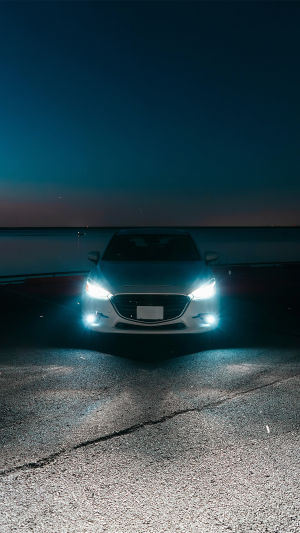
Car headlights are crucial for visibility, but over time, they tend to lose their brightness. Have you ever noticed how your headlights seem dimmer after a few years?
It's not just your imagination—it's a common issue. As car lights age, the bulb's filament weakens, or the lens gets fogged, which reduces light output.
This can lead to less effective illumination at night and can be a safety concern. Luckily, there are several ways you can make sure your headlights stay bright and last longer.
<h3>Clean Your Headlights Regularly</h3>
The condition of your headlights plays a huge role in their brightness. Over time, dirt, debris, and UV exposure can cause the lens to cloud over. This fogging effect decreases the amount of light that can pass through.
Here's what you can do:
• Use a headlight restoration kit: These kits typically include sandpaper, polishing compounds, and a sealant to restore the clarity of your headlight lens.
• DIY with toothpaste: If you don't have a kit, toothpaste can be a quick fix. Apply it with a soft cloth and rub it in circular motions to remove the fog.
• Routine cleaning: Once cleaned, regularly wipe down your headlights with a microfiber cloth to keep them clear and free from dirt build-up.
<h3>Check for Corrosion on the Battery Terminals</h3>
If your headlights are dimming faster than usual, it might be due to a weak battery connection. Corrosion around your battery terminals can prevent proper electrical flow, which could reduce the power getting to your headlights.
Here's how to check and fix it:
• Inspect terminals: Pop the hood and check the battery terminals for any visible corrosion (usually a white or greenish powder).
• Clean the terminals: Use a solution of baking soda and water to clean off any corrosion. Simply mix a tablespoon of baking soda in a cup of water, then apply it with a toothbrush.
• Tighten connections: Make sure the battery connections are tight. Loose terminals can also cause power issues.
<h3>Upgrade to LED or Xenon Lights</h3>
If you're looking for a longer-lasting and brighter light, consider upgrading from traditional halogen bulbs to LED or Xenon lights. These lights not only last longer, but they also offer better brightness, which can improve your visibility at night.
• LED lights: These are known for their energy efficiency and long lifespan—often up to 25,000 hours. Plus, they're much brighter than halogen bulbs.
• Xenon lights: Also known as HID (High-Intensity Discharge) lights, Xenon lights are a great option if you want a stronger light output. They last longer than halogen but are typically more expensive.
<h3>Avoid Overusing Your Headlights</h3>
It might seem like a no-brainer, but using your headlights unnecessarily can cause them to wear out faster. For example, leaving your car lights on when parked, especially in daylight, can shorten their lifespan.
To avoid this:
• Use automatic lights: Many modern cars have automatic light settings that turn your headlights off when the engine is off.
• Turn off headlights when not needed: Make it a habit to turn off your headlights when you don't need them, especially if you're parked for a while.
<h3>Consider Replacing Old Bulbs</h3>
Even with the best care, your bulbs will eventually wear out. If your headlights are flickering or not providing enough light, it may be time to replace them. When replacing bulbs, always use the correct type for your car to avoid damage to the wiring.
Here's how to do it:
• Buy the right bulbs: Make sure the new bulbs match the wattage and type specified in your vehicle manual.
• Replace in pairs: To maintain balanced lighting, replace both headlights at the same time—even if only one seems dimmer.
<h3>Final Thoughts</h3>
Car headlights play a vital role in your safety, and keeping them bright and durable doesn't have to be a hassle. Regular maintenance, like cleaning the lenses, checking the battery, upgrading bulbs, and practicing good headlight habits, can keep your lights shining bright for years to come. Try a few of these steps today and see the difference in your car's lighting performance.


