

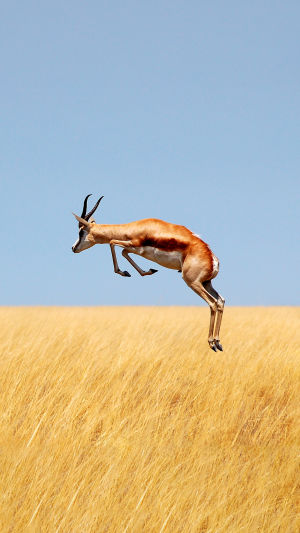
Lykkers, today we explore the springbok, an iconic antelope that lives mainly in southern Africa. It is well known for its speed, agility, and unique jumping skill. This animal plays an important role in local ecosystems and culture. It is also the national symbol of South Africa.
The springbok belongs to the antelope family. It has adapted to dry land over time. Its strong survival ability helps it live in open plains and semi-desert areas.
<h3>Body Features And Physical Traits</h3>
We notice that the springbok has a slim body and long legs. Its shoulder height usually measures between 71 cm and 86 cm. The weight ranges from about 27 kg to 42 kg. These body features support fast movement and powerful jumps.
Both males and females grow black horns. The horns are around 35 cm to 50 cm long and curve backward. The face is white with a dark stripe running from the eye to the mouth.
Its fur is light brown with a reddish-brown line along the side of the body. A white area appears on the rear of the body, and a white skin fold can lift and become clearly visible when it moves. These clear markings make it easy to identify in the wild.
<h3>Habitat And Living Environment</h3>
We find springboks mainly in southern and southwestern Africa. They live in dry grasslands, open plains, and desert areas. These places provide space to run and plants to eat.
They prefer wide landscapes where they can see danger from far away. Living in open areas helps them escape from predators quickly.
In the past, large herds moved across land to search for fresh food and water. This movement supported survival during seasonal changes. Today, some groups still move depending on climate conditions.
<h3>Diet And Water Adaptation</h3>
We learn that springboks mainly eat plants. Their diet includes bushes, leaves, grass, and juicy plants. These food sources provide nutrients and moisture.
A key adaptation is that springboks can go long periods without drinking water, meeting much of their moisture needs from the plants they eat—especially when succulent vegetation is available. When water is available, they may drink.
Their digestive system works efficiently to extract nutrients from tough plants. This ability supports long-term survival in harsh environments.
<h3>Unique Jumping Behavior</h3>
The springbok is famous for its special jumping action called pronking. When it feels excited or senses danger, it jumps high into the air several times.
These leaps can be dramatic—often around 2 meters and sometimes reported higher—depending on the animal and the situation. During the jump, the legs stay stiff and the back arches. The white flap on the backside opens clearly, creating a strong visual effect.
This behavior may send signals to other members of the group. It can show strength and alert others about possible threats. It may also confuse predators because the sudden movement makes it harder to predict direction.
Watching a herd jump together across open land is impressive and powerful.
<h3>Reproduction And Growth</h3>
We see that breeding can happen throughout the year. However, reproduction often increases during the rainy season. Rain brings more plant growth and better food conditions.
After a pregnancy period of about five to six months, a baby springbok is born. The young one drinks milk for around six months. Gradually, it learns to eat plants and becomes independent.
This natural cycle helps maintain stable population growth. Good habitat conditions support healthy offspring development.
<h3>Conservation Status And Importance</h3>
The springbok is currently listed as not threatened. Its population remains stable in many regions. Some areas even show population growth because of wildlife protection and habitat management.
People value it for its role in nature and culture. It represents strength and national pride. It is also important for eco-tourism and wildlife observation.
Protecting open land and controlling hunting activities help maintain balance. Conservation efforts ensure future generations can see this amazing animal in the wild.
<h3>Let’s Reflect On The Springbok</h3>
We have explored the springbok’s body features, habitat, diet, jumping skill, and life cycle. This antelope shows strong adaptation to dry environments and impressive movement ability.
Lykkers, what impresses you most about the springbok? Its speed, its jump, or its survival power? Let us continue learning about wildlife and respect nature together. By understanding these animals, we protect the environment and support biodiversity for the future.


