

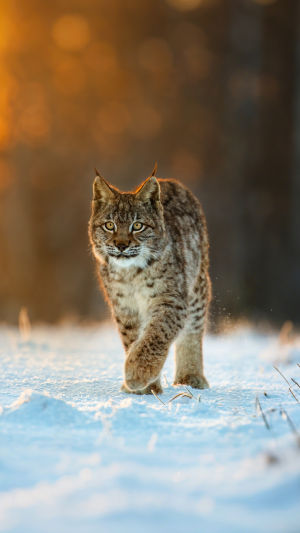
We explore the Eurasian lynx, a strong wild cat that lives across Europe and Asia. It moves quietly through forests and mountains, often staying away from people. Many of us have seen pictures, but few of us understand its daily life and survival skills.
In this article, we look at its body features, habitat, habits, and role in nature. Lykkers, let us learn about this fascinating animal together in simple and clear words.
<h3>Basic Facts and Distribution</h3>
The scientific name of the Eurasian lynx is Lynx lynx. It belongs to the cat family and is one of the largest wild cats in temperate and cold forest areas. It lives in countries across Europe and Asia, including northern, central, and eastern regions.
It prefers large forests, mountains, and remote areas where human activity is low. These natural spaces provide cover and food. Protection of forest land plays a key role in its survival. When habitats shrink, its population can face pressure and risk.
<h3>Body Size and Physical Features</h3>
We see that the Eurasian lynx has a strong and muscular body. Its body length usually ranges from 80 cm to 130 cm. The tail is short, around 16 cm to 23 cm long. Its weight often ranges between 15 kg and 30 kg. Males are slightly heavier than females, with a small difference in body mass.
Its legs are long and powerful. Large paws covered with thick fur help it walk easily on snow. This natural design works like a built-in support system for movement in deep winter conditions.
The body shape helps it jump quickly and chase prey over short distances. Strength and speed together make it an effective hunter.
<h3>Fur Color and Special Marks</h3>
The fur of the Eurasian lynx is thick and soft. In winter, the coat becomes longer and denser to protect it from cold weather. The color of the back can vary from gray brown to red brown or light yellow brown.
Dark spots or small stripes often appear on its body. These patterns help it blend into forests and rocks. The belly is lighter, usually white or cream colored. The tail tip is often dark.
One of its most special features is the long hair on the tip of its ears. These black hair tufts can grow several centimeters long. They improve hearing and give the animal a unique look. The ears can turn toward sound, helping it detect movement around it.
<h3>Diet and Hunting Behavior</h3>
We know that the Eurasian lynx is a skilled hunter. Its main food includes small deer, rabbits, and other medium-sized mammals. It hunts quietly and patiently, waiting for the right moment to attack.
It usually hunts during dusk, night, or early morning. Its sharp eyesight and strong legs allow it to jump quickly toward prey. It does not chase for long distances. Instead, it relies on surprise and speed.
Food availability influences its movement. If prey becomes scarce in one area, it may travel to another region to search for better hunting grounds.
<h3>Habitat and Daily Life</h3>
This wild cat depends on large forest ecosystems. Dense trees, bushes, and rocky landscapes give it space to hide and rest. It avoids open land because it needs cover for hunting and protection.
The Eurasian lynx lives mostly alone. It marks territory to avoid conflict with other individuals. Each animal controls a certain area where it hunts and lives.
During cold seasons, thick fur and large paws help it move across snow without difficulty. Its body structure shows clear adaptation to cold climates and forest environments.
<h3>Ecological Role and Protection</h3>
We see that the Eurasian lynx plays an important role in maintaining ecological balance. As a top predator, it controls the number of prey animals. This balance prevents overpopulation of herbivores and protects vegetation.
Healthy forest systems need predators to maintain stability. Protecting the lynx also means protecting biodiversity. Threats such as habitat loss and human disturbance can affect its survival.
Conservation efforts focus on protecting forests and reducing conflict between humans and wildlife. When natural space remains safe, this wild cat can continue living freely.
<h3>Final Thoughts</h3>
The Eurasian lynx is a powerful and quiet forest hunter with special physical features and strong survival skills. Its thick fur, long ear tufts, and large paws show how well it adapts to cold environments. It helps keep forest ecosystems balanced and healthy.
Lykkers, do you feel closer to this amazing animal now? Protecting wildlife and forests ensures that species like the Eurasian lynx can continue to thrive. When nature stays healthy, we all benefit from its balance and beauty.
The Hidden World of Europe’s Elusive Cat: Eurasian Lynx
Video by Animal Marvels


