

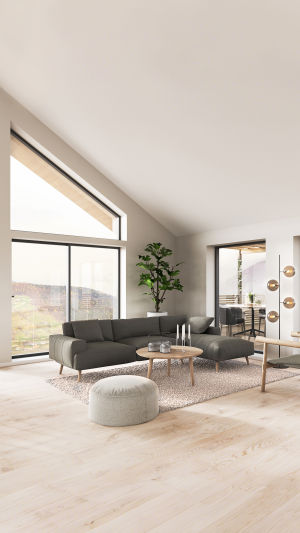
Walking into a minimalist home feels like taking a deep breath.
There's a sense of calm, open space, and clarity that's hard to find in cluttered rooms.
Minimalism isn't about emptiness; it's about intentional choices, letting each item serve a purpose and contribute to the overall harmony. Here's how to create a home that's serene, functional, and timeless.
<h3>Choose a Neutral Palette</h3>
Color plays a crucial role in minimalism. Soft, neutral tones like whites, grays, and beige create an airy foundation that can help a space feel larger and calmer.
<b>Tips for color:</b>
<b>1.</b> Keep walls and floors in light shades to reflect natural light.
<b>2.</b> Use accent colors sparingly through cushions, rugs, or artwork.
<b>3.</b> Layer textures within the same palette to avoid flatness.
<b>Practical example:</b> A bedroom painted in soft gray with a cream duvet and linen curtains maintains a soothing atmosphere without feeling dull.
<h3>Simplify Furniture Choices</h3>
Minimalist design focuses on functional furniture with clean lines. Each piece should have a purpose, and unnecessary ornamentation is avoided.
<b>Tips for furniture:</b>
<b>1.</b> Opt for multi-functional pieces like a storage bed or a console with drawers.
<b>2.</b> Stick to simple geometric shapes that complement the room's flow.
<b>3.</b> Choose durable, quality materials that will last instead of short-lived trend pieces.
<b>Practical example:</b> A dining table with built-in storage helps keep clutter out of sight while maintaining a minimalist aesthetic.
<h3>Embrace Open Space</h3>
Space is just as important as items in minimalism. Rooms should feel open and uncluttered, letting the eye move freely.
<b>Tips for space:</b>
<b>1.</b> Avoid overcrowding surfaces like counters, tables, and shelves.
<b>2.</b> Keep walkways clear to enhance flow and accessibility.
<b>3.</b> Use floating furniture or wall-mounted storage to free up floor space.
<b>Practical example:</b> A living room with a low-profile sofa and a single side table feels spacious, even in a smaller area.
<h3>Incorporate Natural Elements</h3>
Natural materials add warmth and texture, preventing minimalist spaces from feeling sterile. Wood, stone, and plants bring life and tactile interest.
<b>Tips for materials:</b>
<b>1.</b> Use light woods for flooring or shelving to create a soft, inviting base.
<b>2.</b> Add soft fabrics like wool, linen, or cotton for comfort.
<b>3.</b> Include greenery through potted plants or small indoor trees.
<b>Practical example:</b> A simple oak coffee table paired with a wool rug and a single potted plant adds warmth while keeping the minimalist ethos intact.
<h3>Decorate Thoughtfully</h3>
Minimalism isn't about removing all decoration—it's about making each choice intentional. Select a few meaningful items that add personality without overwhelming the space.
<b>Tips for decor:</b>
<b>1.</b> Limit tabletop and shelf items to a few key pieces.
<b>2.</b> Rotate artwork or accessories seasonally to keep the environment dynamic.
<b>3.</b> Use items with dual purposes, like a sculptural lamp or a woven basket for storage.
<b>Practical example:</b> A sleek ceramic vase on a dining table paired with a framed photograph creates a focal point while maintaining simplicity.
Minimalist home design is about creating a space that feels calm, purposeful, and inviting. By combining neutral colors, functional furniture, open space, natural materials, and thoughtful accents, you can enjoy a home that's not only beautiful but also supports a clear and relaxed lifestyle.


