

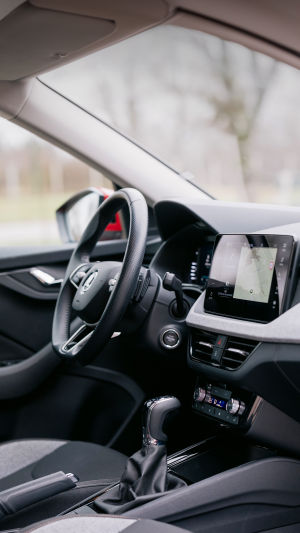
Walking into a modern car today, it's hard not to notice how different it feels compared to a decade ago.
Gone are the rows of knobs and switches, replaced by sleek screens and responsive surfaces.
The interior is evolving from mechanical control to an interactive digital experience, where touch, gesture, and voice define how we interact with the car.
<h3>The Shift from Mechanical to Digital Controls</h3>
Traditional interiors relied heavily on physical buttons, levers, and dials. While intuitive, these elements limited flexibility and often cluttered the cabin. Digital interfaces, however, allow the same space to serve multiple functions. A single touch panel can control climate, media, navigation, and even safety features.
<b>Actionable example:</b> A driver can swipe across a center touchscreen to adjust the air conditioning, change the music, and view the map—all without reaching for separate buttons. Designers should focus on logically grouping digital controls to reduce learning curves and prevent distractions.
<h3>Interactive Touchscreens and Haptic Feedback</h3>
Touchscreens are central to modern car interiors, but they're not just flat displays. Haptic feedback provides tactile responses that mimic the sensation of pressing a button, improving accuracy and reducing the need to look away from the road. Multi-touch gestures allow more advanced interactions, such as zooming in on maps or swiping through playlists.
<b>Actionable example:</b> A 12-inch center screen can combine multiple functions: swiping up for climate settings, swiping down for media, and pinch gestures for navigation. Designers need to ensure screen placement minimizes glare and maintains comfortable reach from both driver and passenger seats.
<h3>Voice Control and AI Assistance</h3>
Voice interaction is becoming a vital part of digital interiors. Modern systems can recognize natural language commands, allowing drivers to adjust cabin settings, make calls, or access navigation without taking hands off the wheel. AI integration means the system can learn habits and predict preferences over time.
<b>Actionable example:</b> Saying “Set temperature to 22°C and play jazz playlist” activates both climate control and media simultaneously. Over time, the system could suggest preferred settings based on driving patterns. Designers should ensure voice systems are responsive, easy to activate, and capable of understanding diverse accents.
<h3>Customizable Digital Dashboards</h3>
Instrument clusters are no longer fixed arrays of dials. Fully digital dashboards allow drivers to choose what information is displayed and how it's presented. Safety alerts, fuel efficiency, navigation cues, and media can all coexist in a clean, flexible interface.
<b>Actionable example:</b> During a long drive, a driver may prioritize fuel economy and navigation, while a short city trip might focus on speed and nearby traffic alerts. Designers should make dashboard customization intuitive, with presets or quick-swap options that don't require navigating deep menus.
<h3>Integrated Connectivity and Smart Devices</h3>
Digital interiors are only as effective as their connectivity. Integration with smartphones, smart home devices, and cloud services allows seamless control over the environment and provides real-time updates. For instance, the car can sync with calendars to suggest departure times or traffic-aware routes.
<b>Actionable example:</b> Before leaving the office, the driver's phone can send a route to the car, and the system can pre-adjust the cabin temperature accordingly. Designers should ensure that connections are secure and interfaces are consistent across devices to prevent user frustration.
<h3>Safety and Reduced Cognitive Load</h3>
Digital controls don't just look modern—they enhance safety. By consolidating functions and using voice or gesture, drivers can operate systems with minimal distraction. Intelligent layouts prioritize critical alerts while background functions remain accessible but unobtrusive.
<b>Actionable example:</b> Adaptive menus can hide non-essential features while driving at high speed, reducing clutter and focusing attention on speed, lane assist, and navigation prompts. Designers should balance functionality with simplicity to avoid overwhelming the driver.
The move from mechanical knobs to fully digital controls is transforming car interiors into responsive, personalized environments. Touch, gesture, and voice not only modernize the cabin's appearance but also make driving safer, more comfortable, and more intuitive. The future of interiors isn't just about technology—it's about creating an environment that adapts to you, anticipating needs and making every journey smoother.


